Some toys come with one job and one answer. Others can become a hundred different things. The second kind, open-ended toys, are the ones children come back to again and again.
What open-ended play looks like
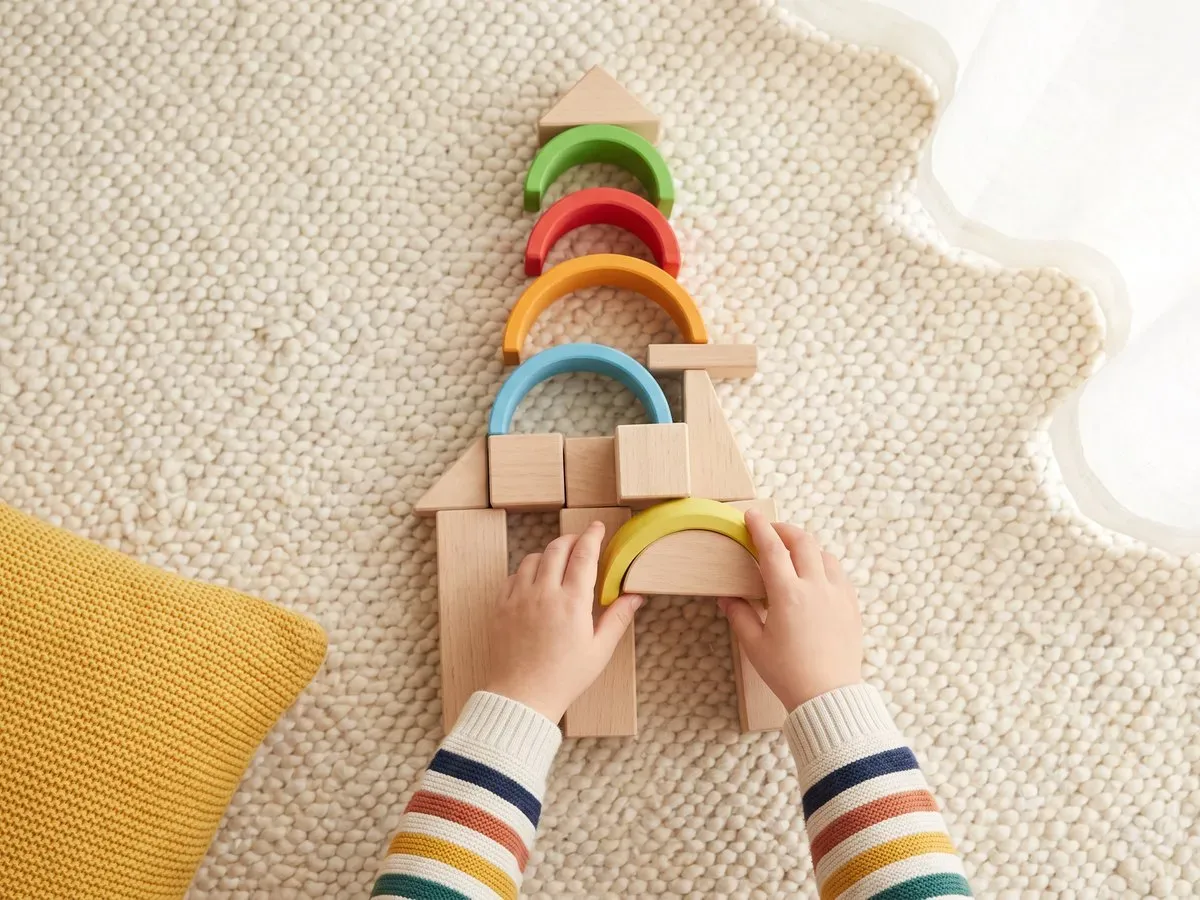
A set of wooden arches is a classic example. One day it is a rainbow, the next a car tunnel, the next a very wobbly bridge for a toy dog. The child decides what it is, and the game changes as they do.
Blocks, balls, scarves, boxes and simple figures all work the same way. They leave room for the child to lead instead of following a set of instructions.
Why it is worth the space
Open-ended play builds imagination, but also language, patience and problem solving. A child who has to decide what to do next is practising the same skill they will use to write a story or solve a puzzle.
It also means fewer toys that last longer. Choose a handful of open-ended pieces and rotate them, rather than filling the room with things that only do one trick.
Watch what your child does with a toy before you decide it is finished. Often the best play is the play they invent themselves.